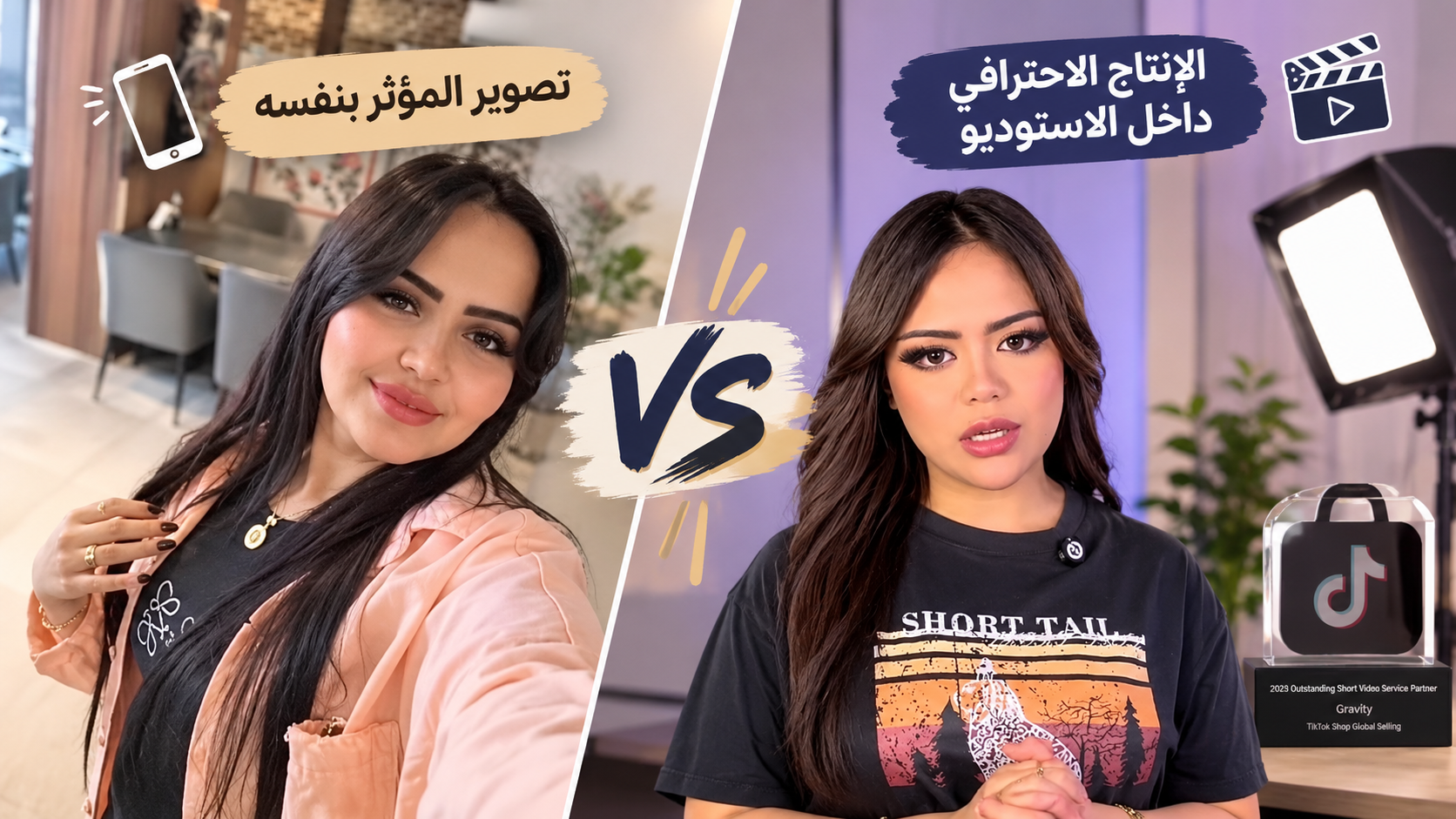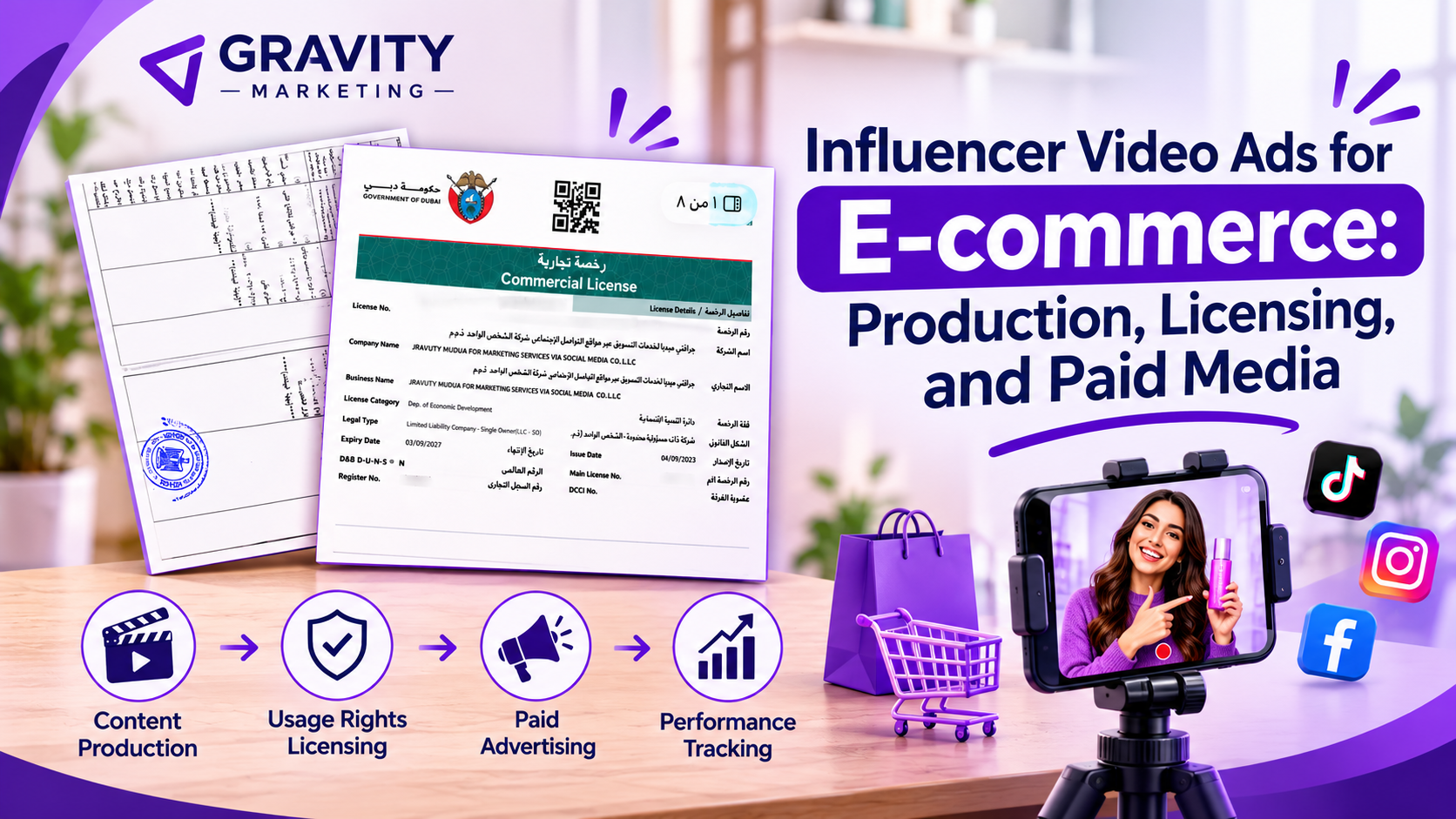
Influencer Video Ads for E-commerce: Production, Licensing, and Paid Media
Influencer videos are no longer limited to product reviews or personal experiences shared on social media accounts. Brands can now repurpose this content in paid advertising campaigns to reach potential customers and drive sales through their e-commerce stores.
However, turning influencer content into an effective advertisement involves more than simply producing a high-quality video. It requires planning three essential stages: creating content suitable for advertising, securing the necessary usage rights, and incorporating the video into paid media campaigns while monitoring its performance.
In this guide, we explore how brands can manage these stages and the key considerations that help them get more value from influencer-generated content.
1. Influencer Video Production: From Concept to Advertising Content
A campaign begins by identifying the type of video that can support the e-commerce store's objectives. Not every piece of content that performs well on an influencer's account will necessarily be suitable for paid advertising. This is why brands should consider how the video will be used from the planning and production stages.
How Do You Choose the Right Video Concept
The choice of concept depends on the product and the stage of the customer journey. Some of the content formats brands can use include:
-
Product Review: The influencer shares their experience with the product and highlights its key features and observations.
-
Product Demonstration: The influencer explains how to use the product and demonstrates its features in a practical way.
-
Unboxing: The video captures the moment the influencer receives the product, opens the package, and explores its contents.
-
Problem-Solution: The video presents a problem customers may face and shows how the product can help address it.
-
Product Highlights: The content focuses on one or more product features that matter to the target audience.
What Makes a Video Suitable for Advertising
When preparing the content, make sure the video is clear and engaging from the first few seconds. It should present the product in an easy-to-understand way and highlight its key features without exaggeration or unsupported claims.
It is also a good idea to prepare multiple creative versions of the video. For example, one short version could focus on a specific product feature, while another could provide a more detailed demonstration. This allows the marketing team to test different advertising messages instead of relying on a single version.
You can learn more about Influencer-Led Video Production for Brands in the Middle East and North Africa, from selecting content creators to defining deliverables and usage rights.
2. Influencer Video Licensing: What Rights Does Your Brand Need
One of the most important considerations before launching an advertising campaign is video usage rights. An influencer's agreement to publish content on their own account does not automatically mean the brand can use that video in paid advertisements or repost it across all its platforms.
Therefore, the licensing scope should be agreed upon and clearly documented before production begins.
What Should Be Included in a Video Usage License
-
Usage Duration: Specify how long the brand is allowed to use the video, whether for one month, several months, or another agreed period.
-
Advertising Platforms: Clarify whether the license covers Instagram, Facebook, TikTok, or other platforms.
-
Geographic Scope: Identify the countries or markets where the advertisement can run, especially if the store targets multiple markets.
-
Type of Usage: Distinguish between organic reposting on the brand's social media accounts and using the video in paid advertising campaigns.
-
Editing and Revisions: Agree on whether the brand can crop the video, add subtitles, change its dimensions, or create different advertising versions.
-
Original Files: If the brand needs raw footage or additional clips, this should be clearly specified in the agreement.
-
Additional Fees: Clarify whether certain uses, such as extending the license or adding new platforms, require additional fees.
Is Content Licensing Different from Video Ownership
Yes. It is important to distinguish between content ownership and the right to use it. The influencer may retain ownership of the video while granting the brand a license to use it for specific purposes and for an agreed period.
For this reason, brands should not assume that paying production costs automatically grants them all usage rights. You can also refer to this guide on Essential Elements of an Influencer Marketing Contract to understand which terms should be clarified when agreeing on content usage rights.
3. Paid Media: Turning Influencer Videos into Advertisements
Once the video has been produced and the necessary usage rights have been secured, the next step is to run it as part of paid advertising campaigns. The goal is not simply to increase views, but to reach the right audience and encourage them to visit the online store or take an action that brings them closer to making a purchase.
Which Platforms Can Brands Use
The right platform depends on the product, target audience, and campaign objectives. Some of the main options include:
-
Instagram and Facebook: Influencer videos can be used in Meta advertising campaigns to reach different audience segments and retarget store visitors or people who have interacted with the content, depending on the campaign setup.
-
TikTok: The platform allows brands to use creator content in advertising formats suited to its environment, including certain ad options that rely on creator authorization, subject to platform requirements.
-
YouTube: Product reviews and demonstration videos can be incorporated into suitable advertising formats, particularly for products that require explanation or a more detailed presentation.
How Do You Prepare an Influencer Video for an Advertising Campaign
Before launching the advertisement, make sure the content is prepared to suit the platform and target audience:
-
Choose the Right Version: Select the video version that presents the product and its marketing message clearly.
-
Prepare the Correct Formats: Adjust the video dimensions to suit different placements, such as vertical formats for Instagram Reels and TikTok.
-
Add a Clear Call to Action (CTA): Use a direct message such as "Discover the Product" or "Shop Now" to guide viewers toward the next step.
-
Include the Store Link: Direct the advertisement to the relevant product page instead of sending all visitors to the homepage.
-
Check Permissions: Make sure the brand has the required usage rights and authorizations before running the advertisement.
If you are planning to use UGC videos in Meta and TikTok advertising campaigns, you can also explore our guide on How to Use User-Generated Content (UGC) Videos in Meta and TikTok Ads.
4. How Do You Set an Advertising Campaign Budget
Campaign costs are not limited to the influencer's fee or video production expenses. Brands should account for all costs associated with using the content and running it as paid advertising.
The budget can be divided into the following components:
|
Cost Component |
What It Includes |
|---|---|
|
Influencer Fee |
The cost of the collaboration and content creation |
|
Video Production |
Filming, editing, and any additional production services |
|
Usage Rights |
Licensing the video for advertising and use across specified platforms |
|
Paid Media |
The budget allocated to running the advertisements |
|
Campaign Management |
Planning, setup, monitoring, and performance analysis |
It is best to separate the content production budget from the paid advertising budget. This allows brands to understand the cost of each stage and evaluate their spending more clearly.
It is also not advisable to distribute the budget equally across all videos without testing their performance. Start with a suitable number of creative variations, monitor the results, and allocate spending based on actual performance.
5. Measuring the Performance of Influencer Video Ads
Once the campaign is running, brands need to monitor key performance indicators to understand how influencer videos contribute to their e-commerce objectives.
Which Performance Metrics Should You Track
-
Impressions and Reach: Help measure how many times the advertisement was displayed and how many people it reached.
-
Video Views: Help evaluate content visibility and track the number of views according to each platform's definition.
-
Click-Through Rate (CTR): Measures the percentage of people who clicked on the advertisement compared with the number of impressions. Learn more about CTR.
-
Cost Per Click (CPC): Tracks the average cost of generating one click. You can also explore our guide to CPC.
-
Conversion Rate: Measures the percentage of visitors who complete the desired action, such as making a purchase.
-
Customer Acquisition Cost (CAC): Shows how much it costs to acquire a new customer through the campaign. Learn more about CAC.
-
Return on Ad Spend (ROAS): Compares the revenue attributed to advertising with the amount spent on those advertisements. Find out more about ROAS.
How Do You Calculate Return on Ad Spend (ROAS)
You can use the following formula:
\[ ROAS = \frac{\text{Revenue Attributed to Ads}}{\text{Advertising Spend}} \]Example: If a brand spends EGP 10,000 on advertising and generates EGP 40,000 in attributed sales, its ROAS is 4x.
However, it is important to remember that ROAS is not the same as net profit. It does not account for all product costs, shipping, commissions, discounts, and other business expenses.
6. Mistakes to Avoid When Using Influencer Videos in Paid Advertising
A brand may have a high-quality video, secure the necessary usage rights, and allocate an appropriate advertising budget, yet still fail to achieve the expected results because of common mistakes.
1. Using the Video Without a Clear License
Relying only on the influencer's permission to publish the video can lead to problems when the brand wants to use the content in paid advertising.
The Solution: Clearly define usage rights, permitted platforms, licensing duration, and geographic scope in the agreement before production begins.
2. Producing a Video That Is Not Suitable for Advertising
A video may work well for the influencer's followers but be too long, fail to introduce the product quickly, or lack a clear call to action.
The Solution: Plan for advertising use from the beginning and request different versions that suit the campaign objectives and various platforms.
3. Directing Ads to the Wrong Landing Page
An advertisement may successfully generate clicks, but directing visitors to a general page or a page that does not clearly present the product can reduce the chances of completing a purchase.
The Solution: Link each advertisement to the relevant product page and make sure the price, product details, and purchasing process are clearly presented.
4. Evaluating Campaign Performance Based on Views Alone
A high number of video views does not necessarily mean the campaign has generated sales or delivered a suitable return for the store.
The Solution: Align performance metrics with the campaign objective. Track clicks, conversions, sales, and customer acquisition costs alongside video views.
Conclusion: Turn Influencer Videos into an Ongoing Marketing Asset
The real value of influencer video advertising comes when brands treat content as a marketing asset that can be used across multiple channels, rather than simply as a post whose impact ends after it is published on the creator's account.
By planning production carefully, defining usage rights clearly, choosing the right advertising platforms, and monitoring performance metrics, brands can use influencer videos to strengthen product visibility, reach potential customers, and increase e-commerce sales opportunities.
Contact Gravity Marketing
Are you looking for a partner to help you produce influencer videos and turn them into advertising content that supports your e-commerce store's growth? Gravity Marketing helps you connect with the right content creators, develop creative concepts that align with your brand identity, and manage content production while coordinating the requirements for using videos in marketing campaigns.
From influencer selection and content brief preparation to production follow-up and coordinating video usage across marketing channels, we help you build campaigns that leverage the power of creator content and support your brand's objectives across the Middle East and North Africa.
- Phone: +20 155 512 3155
- Phone: +20 101 492 2711
- Email: info@gravity-media.net
- Contact the Gravity Marketing Team