Self-Recorded Influencer Videos vs. Studio Production: Which Is Right for Your Ad
Introduction: Choosing the Right Production Style
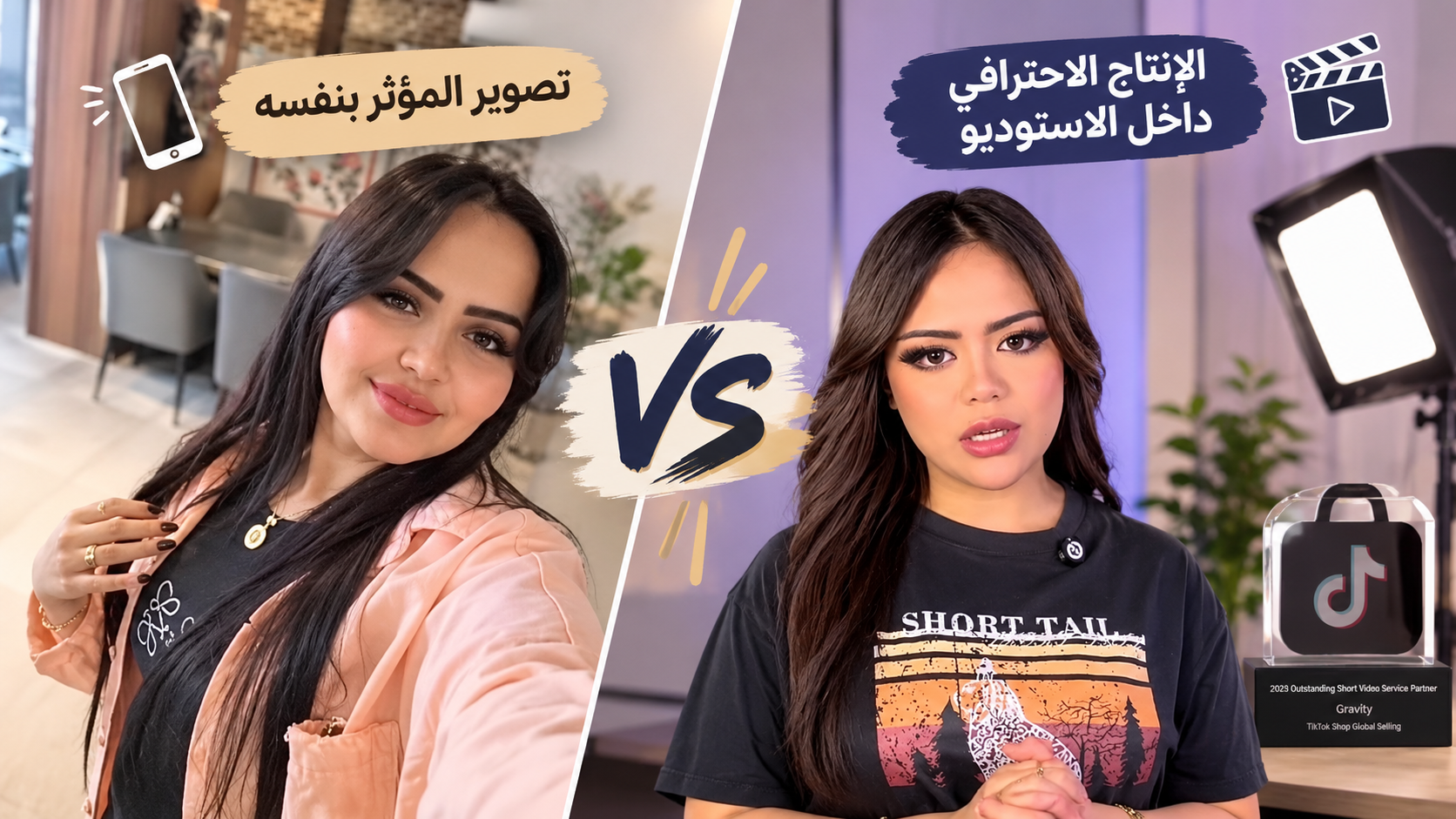
When planning an influencer marketing campaign, brands face an important decision: should they rely on a video filmed by the influencer using a mobile phone in a natural setting, or invest in professional studio production for greater control over visual and audio quality
There is no single answer that works for every brand. Each production style serves a different purpose, and the right choice depends on the product, target audience, budget, and advertising message. In this article, we explore the differences between the two approaches, when to use each one, and how brands can combine them to get the most out of influencer content.
First: Self-Recorded Influencer Videos (Self-Shot / UGC)
What Is a Self-Recorded Video
A self-recorded video is content filmed by the influencer, usually using a mobile phone in a natural setting such as their home, car, or a café. This approach focuses on presenting content in a casual, relatable way, making it feel less formal than a traditional advertisement.
When Should Brands Use This Format
Self-recorded videos are suitable in the following situations:
-
Building trust and credibility: When a brand wants to introduce a product through a personal experience or recommendation that feels natural and relatable to the audience.
-
Platforms such as TikTok and Instagram Reels: When an informal content style fits the platform and its target audience.
-
Limited budgets: When a brand needs to produce content at a lower cost without setting up a studio or hiring a full production team.
-
Fast execution: When a campaign has a tight deadline or needs to respond quickly to a trending topic.
-
Everyday consumer products: Such as beauty products, clothing, food, and apps, especially when demonstrating the user experience is an important part of the advertising message.
Advantages of Self-Recorded Videos
-
A natural style: Presents the product in everyday settings and can make the content feel more relatable to the audience.
-
Lower production costs: Usually eliminates the need to rent a studio, use specialized filming equipment, or hire a large production team.
-
Faster execution: A video can be completed within a relatively short period. Production may take around 3–5 days from concept to delivery, depending on the content and review process.
-
Production flexibility: Makes it easier to develop new ideas or adapt content to trends and campaign requirements.
Disadvantages of Self-Recorded Videos
-
Inconsistent quality: Video, audio, and lighting quality depend on the influencer's filming skills and available equipment.
-
Limited control: It may be difficult to fully control camera angles, product presentation, and visual details.
-
May not suit some luxury brands: If a brand relies on a premium and carefully defined visual identity, casual filming may not deliver the level of consistency and production quality it requires.
Join the Gravity Marketing creator network and explore collaboration opportunities with brands. Turn your influencer content into versatile marketing assets and make the most of your work across different channels throughout the Middle East and North Africa.
Second: Studio Production
What Is Studio Production
Studio production involves creating a video in a fully equipped studio or professional filming location, using suitable cameras, lighting, and audio equipment. It may also involve a production team that includes a director, camera operator, sound engineer, and video editor. This approach provides greater control over visual and audio elements and how the product is presented.
When Should Brands Use This Format
Studio production is suitable in the following situations:
-
Luxury products: Such as watches, jewelry, cars, and real estate, when a brand needs to showcase product details and overall appearance professionally.
-
Complex technology products: When a product requires a detailed explanation or a demonstration of features that may be difficult to communicate through simple filming.
-
Brand awareness campaigns: When the goal is to create comprehensive visual content that reflects the brand identity and can be used in large-scale campaigns.
-
Television commercials (TVCs): When a campaign requires a production standard suitable for television broadcasting.
-
Campaigns with demanding production requirements: When the budget allows for a specialized team, professional equipment, and dedicated production facilities.
Advantages of Studio Production
-
High visual and audio quality: Professional equipment helps deliver clearer and more consistent visuals and sound.
-
Greater control over details: Lighting, camera angles, backgrounds, and product presentation can all be adjusted to match the brand identity.
-
Strengthening brand image: Helps present luxury products and products with intricate details through a carefully planned visual style.
-
Wider reuse opportunities: Videos can be produced for use across multiple platforms and marketing channels, depending on their format, usage rights, and each platform's requirements.
Disadvantages of Studio Production
-
Higher costs: Studio rental, equipment, crew, and editing usually require a larger budget. Depending on the scale of production, the cost may be several times higher than that of a self-recorded video.
-
Longer production time: The process, from planning and filming to final delivery, may take several weeks. It can range from 3 to 6 weeks, depending on the project's complexity.
-
A more formal style: The video may feel like a traditional advertisement if the concept and execution do not take the platform and target audience into account.
-
The need to adapt content for different platforms: Professional production does not automatically make a video suitable for every platform. Shorter versions or adjustments to the pacing, opening hook, and presentation may be necessary.
Join the Gravity Marketing creator network and explore collaboration opportunities with brands. Turn your influencer content into versatile marketing assets and make the most of your work across different channels throughout the Middle East and North Africa.
Third: A Quick Comparison Between Self-Recorded Videos and Studio Production
The following table highlights the main differences between the two approaches and helps brands identify which production style better suits their advertising campaign.
|
Comparison Criteria |
Self-Recorded Videos (Self-Shot) |
Studio Production |
|---|---|---|
|
Cost |
Relatively low |
Relatively high |
|
Production time |
Usually short |
Longer, depending on production scale |
|
Content style |
Natural and casual |
Professional and structured |
|
Visual quality |
Varies depending on filming |
Greater control and consistency |
|
Control over details |
Relatively limited |
Greater control |
|
Suitable platforms |
TikTok, Reels, and Stories |
YouTube, television, and multi-channel campaigns |
|
Suitable products |
Everyday and consumer products |
Luxury, technical, and other products requiring detailed presentation |
|
Marketing objective |
Building trust, engagement, and supporting sales |
Strengthening brand image, awareness, and product presentation |
Note: This is a general comparison. Actual costs, production timelines, and final quality may vary depending on the influencer, production team, and campaign requirements.
Fourth: How to Choose the Right Production Style for Your Ad
The decision should depend on what your brand wants to achieve, rather than production quality alone.
Choose Self-Recorded Videos If:
-
Your audience engages with casual, relatable content.
-
Your product is a consumer product that can be showcased through a direct usage experience.
-
Your budget is limited and you need to produce a larger number of videos.
-
You need to launch your campaign within a short timeframe.
-
Your goal is to share a personal recommendation or product experience that supports trust, engagement, and sales.
Choose Studio Production If:
-
Your brand relies on a premium visual image or a clearly defined advertising identity.
-
Your product requires a detailed demonstration or explanation of its features.
-
You are running a large-scale campaign that requires versatile advertising assets.
-
Your budget allows for a complete professional production process.
-
Your goal is to increase brand awareness and showcase your product through high-quality visuals.
Fifth: The Smart Solution — Combining Both Approaches (Hybrid Approach)
Brands do not necessarily have to choose just one production style for all their campaigns. In some cases, combining self-recorded influencer videos with studio production is a practical way to benefit from the strengths of both approaches.
This strategy can be implemented through:
-
Studio-produced videos: Create the main assets for large-scale campaigns, showcase products that require professional filming, and prepare advertisements that can be adapted for different marketing channels.
-
Self-recorded influencer videos: Produce more casual content for TikTok and Instagram Reels, featuring product experiences and personal recommendations.
-
Diversifying advertising messages: Test different content styles to identify which ones resonate better with the audience, based on campaign performance metrics.
By combining both approaches, brands can benefit from the quality of professional production and the natural feel of influencer content, while selecting the right format for each platform and campaign stage.
Join the Gravity Marketing creator network and explore collaboration opportunities with brands. Turn your influencer content into versatile marketing assets and make the most of your work across different channels throughout the Middle East and North Africa.
Contact Gravity Marketing
Are you looking for the right production style for your advertising campaign? Gravity Marketing helps you find suitable content creators, develop creative concepts that align with your brand identity, and determine the production approach that best fits your goals, whether it is a self-recorded influencer video or professional studio production.
From selecting influencers and preparing content briefs to coordinating filming and overseeing production, we help you create advertising content that combines strong presentation with an understanding of your target audience, supporting your brand's goals across the Middle East and North Africa.
- Phone: +20 155 512 3155
- Phone: +20 101 492 2711
- Email: info@gravity-media.net
- Contact the Gravity Marketing Team